Choosing the appropriate surgical mesh
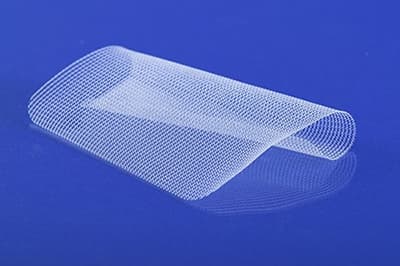
The characteristics of the surgical mesh have a significant impact on its performance in the body. Porosity, mechanical properties, tissue type, material and its weight are among the effective features of the mesh on the patient’s comfort and the outcome of the surgery. The mesh should act like a permanent organ and do not cause inflammation and immune system reaction in the body. By placing the mesh in the body, cells are called to it and produce collagen. Then, connective tissue is formed on the mesh and stabilizes it in the place of implantation. The exact process of covering the foreign implant with connective tissue is shown in Figure 1.

Figure 1. The process of creating connective tissue around a foreign implant.
The raw materials of surgical mesh are physically and chemically inert, but biologically cause foreign body reaction in the patient’s body. The type and characteristics of the material forming the mesh affect the immune system reaction and the healing process of the body. Synthetic-non-absorbable materials (such as polypropylene, polyester and polytetrafluoroethylene) are the most common types of meshes. Among these, polypropylene causes less inflammation and has a more reliable repair process.
The most important factor affecting the size of the mesh pores is the appropriate porosity of the mesh which accelerates the connection and the growth of connective tissue. With the start of inflammation and repair in the body, a set of immune cells (granuloma) cover the mesh and reduce its flexibility. If the pore size is less than 800 micrometers, the granuloma layers connect to each other and do not let the passage of blood vessels and fibroblasts to pass. With increasing pore size, the granulomas created are separated from each other and do not prevent tissue growth (Figure 2). As a result, larger pores have less foreign body reaction and create a better connection between the mesh and body tissue. Also, small pores provide more surface for bacteria to adhere and grow and increase the likelihood of biofilm growth. Biofilm causes increased inflammation and infection in the patient. The pore size of the meshes available in the market is between 0.4 and 3.2 millimeters, while the International Endo Hernia Society recommends meshes with pores of 1 to 1.5 millimeters 1.
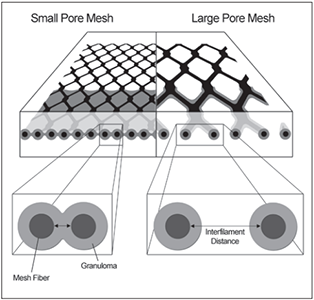
Figure 2. The distance between the mesh fibers and the formation of granuloma on them.
With the start of tissue repair, the surgical mesh contracts and shrinks. The contraction increases the tension applied to the mesh and loosens it. Light meshes have less contraction than other meshes and reduce the chance of recurrence of hernia. The weight of the mesh is directly related to its mechanical strength. The lower the weight of the mesh (less than 50 grams per square meter), the lower its mechanical strength. However, light meshes have the ability to resist the pressures of the abdominal wall and their low mechanical properties do not cause problems. Based on the weight and pore size, the classification of meshes is shown in Table 1 [2].
2of4
Table 1. Classification of meshes based on weight and pore size
|
Category by weight |
Sort by size of pores |
||||
|
|
Surgical mesh type |
(g/m2) Weight |
discontinuity |
Size (millimeter) |
|
|
|
Very light |
less than 35 |
small |
Between 0/1 and 0/6 mm |
|
|
|
Light |
Between 35 and 70 |
Medium |
1 mm |
|
|
|
Standard |
Between 70 and 140 |
Large |
Between 1 and 2 mm |
|
|
|
Heavy |
More than 140 |
Very large |
More than 2 mm |
|
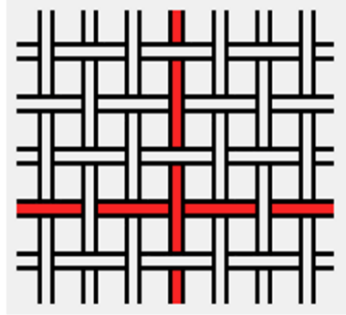
Surgical mesh is made of woven or knitted polymeric fibers. The fibers used can be single-stranded or multi-stranded. Although multi-stranded fibers are more flexible than single-stranded fibers, they provide more contact surface for attachment and growth of bacteria and increase the risk of inflammation and infection. The structure of the mesh fabric gives it different properties. Woven or knitted meshes can be circular or warp-weft. The characteristics and image of each type of these fabrics are briefly shown in Table 2. In the warp-weft fabric, the strands are very close together and have very small pores that are not suitable for surgical mesh. Due to the porosity and flexibility, the circular fabric is more common in mesh production. In the circular fabric, the fibers are looped in the direction of warp or weft and pass through each other. This type of fabric is divided into two types of circular warp and circular weft based on the direction of creating the loop (in the direction of warp or weft).
Table 2. Types of mesh fabric for surgery
|
specifications |
image |
type of surgical mesh |
||
|
close spacing of the fibers very small pores |
|
warp-weft weave |
||
|
|
warp loop knitting Larger pores more elasticity weaving each row with one thread higher structural strength capable of being cut and shaped
|
|
The warp threads |
knitted fabric |
|
weft loop knitting more elastic structure weaving the entire structure with one thread incapable of being cut and shaped |
|
wet |
||
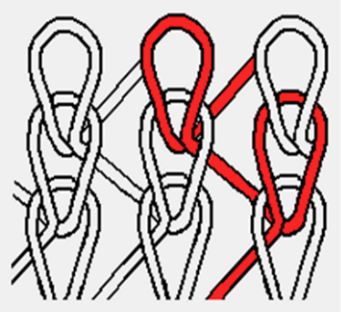
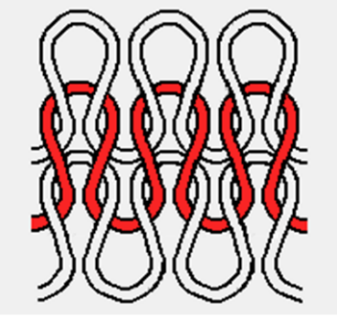
Most surgical meshes are woven in a warp-loop structure because this structure has large pores and can be cut and shaped by the surgeon. By changing the components of the weaving machine, different shapes of warp-loop pores can be obtained (Figure 3). This factor has a significant impact on the mechanical properties and final performance of the mesh, but there are still no clinically relevant studies on the impact of pore shape on patient recovery. Another important point is the non-adhesion of the mesh to the surrounding tissues. Surface coating can prevent the mesh from sticking to the internal organs of the body. In general, polypropylene meshes with low weight and large pores are currently the safest option for general hernia surgery.
Tajhiz Gostar Tamin Salamat, a manufacturer of NovaMax surgical mesh, produces three standard sizes. This mesh is made of single-strand polypropylene with a warp-loop weave and the pore sizes are greater than 1 mm, which improves tissue repair in the body. The weight of this mesh is between 35 and 70 grams per square meter based on ASTM-D 3776 and has the mechanical properties necessary to withstand the internal stresses of the body.
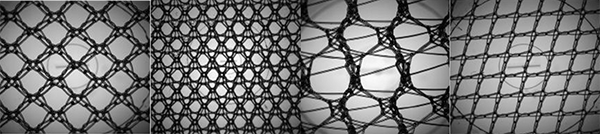
Figure 3. Examples of the shape of surgical mesh pores
[1] R. Bittner et al., “Guidelines for laparoscopic (TAPP) and endoscopic (TEP) treatment of inguinal hernia [International Endohernia Society (IEHS)].,” Surg. Endosc., vol. 25, no. 9, pp. 2773–2843, 2011, doi: 10.1007/s00464-011-1799-6.
[2] C. Wang See, T. Kim, and D. Zhu, “Hernia Mesh and Hernia Repair: A Review,” Eng. Regen., vol. 1, no. April, pp. 19–33, 2020, doi: 10.1016/j.engreg.2020.05.002.
2024-01-21